Showing posts with label environment. Show all posts

Tuesday, May 14, 2013

pGLO and final thoughts on Neurosis article

Today you did the pGLO lab and wrote down your predictions.

Think about the following questions;

1. What genes are on the pGLO plasmid and what does each of them do?
2. What needs to be added to the E.Coli bacteria to make it grow and glow on LB with amp/ara added?
3. What will happen to the bacteria you plated (-pGLO, +pGLO) on the LB/ARA plate?
4. What are your predictions for each of your 8 plates?
5. What are the gene(s), trait(s), protein(s) invovled in this lab?
6. How does this relate to our question of the term? Environmental? Genetic? Both?

Finally, we talked about the neuroses article. Can you answer the questions below?

1. Is neurosis only genetic? If not give some examples of what environmental causes there are
2. Can  you explain the genetic cause discussed in the article? What is the gene, protein, trait?
3. How could you test if this gene really was involved in neurosis?

On your test:

Gene expression in Euk and Bacteria
Operons
Bacteria
Experimental Design
Neurosis
A brainy gene
Neuron HW
Enzymes


Monday, May 13, 2013

pGLO

Here are a couple videos to watch about pGLO. As you watch and do the experiment tomorrow, think about how this relates to our question of  "Is Biology Destiny?"


Watch this video up to 2:52

A Brainy Gene, The Neurosis article, and control of gene expression in eukaryotes

Monday we talked about the Brainy Gene article

Gene: NDE1
Protein: NDE1
Trait: formation of the cerebral cortex by changing how many and what cells are made.

A deletion mutation (2 different versions) causes a frame shift in the sequence. What does this do to the protein?

These mutations result in a much lower growth of the cerebral cortex resulting in children with brains that are only 10% of the normal size. These mutations are recessive therefore how many copies of the allele does there need to be for the microcephaly to be expressed?

GENE EXPRESSION -Control in Eukaryotes
How can gene expression be controlled in Eukaryotes?
-Reguation of mRNA
-Introns/Exons splicing
-Methylation
-Transcription Factors


We will focus on Transcription Factors(TF) (this relates to your Neurosis Article)
What are TF's? - proteins that bind to specific sequences of DNA upstream of a gene (these are the sequences that can be short or long that your neurosis article talked about), that increase or decrease the transcription of a gene.
-TF change expression by:
    -Changing shape of DNA - to allow easier binding of the RNA polymerase resulting in increased expression
    - Blocking genes from RNA polymerase - this lowers (turns off) gene expression.

Neurosis Article
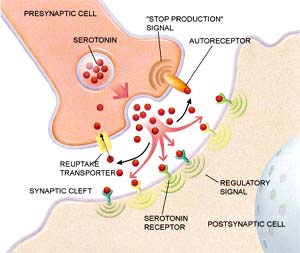
In this article you read about a gene called 5HTTP which is a transport protein that is responsible for uptake of the neurotransmitter seratonin. which is involved in anxiousness. Scientists have discovered a region above the gene itself that along with transcription factors determines how many transporters are made and how quickly they take up seratonin. This region has 2 variants, one short and one long. If you have the short version, there is less receptors transcribed and therefore less uptake of seratonin leading to increased anxiousness, while the long version allows more transporters to be made, lowering the amount of seratonin and decreases anxiousness.

Does this work mean the trait of 'anxiousness' is only genetic, only environmental or both? What is your evidence?


Thursday, May 9, 2013

The Lac Operon

The Lac Operon is from E.Coli bacteria and is an example of an inducible set of genes, that can be turned 'on' and 'off' as needed (for example if lactose is present in the environment!)

The genes of the Lac Operon are responsible for breaking down the sugar Lactose from the environment the bacteria may be in and converting it into usable sugars for cell respiration.

Expression of the genes of the lac operon is determined by the presence or absence of Lactose.


Molecules involved:
Operator - part of the promoter. short sequence to which the repressor binds to inhibit transcription by RNA Polymerase. This binding is what stops the RNA Polymerase from binding to the rest of the promoter.

Promoter - Where RNA Polymerase binds to begin transcription after removal of the repressor protein

Repressor - protein that is bound to the operator in the absence of the sugar lactose. When lactose is present, it binds to the repressor and removes it from the operator. This allows the RNA Polymerase to bind to the promoter to begin transcription

Lactose - sugar involved in this operon. Binds to the repressor to remove it from the operon, to allow for transcription of the 3 genes that are involved in allowing the bacteria to use lactose for energy. 

Lac Z, Y, A - 3 genes involved in the process of importing and breaking down of lactose for energy. One gene is involved makes the transport protein to increase the amount of lactose within the cell (from it's ENVIRONMENT!). The other genes are involved in the breakdown of lactose into smaller sugars. 

This video (to 5:00) is a good explanation of the lac operon


So now can you answer the questions below?

1. What are the molecules involved in the lac operon?
2. Describe the steps of gene expression of the lac operon?
3. How does this relate to our question of the term?


Bacteria - transfer of genetic material

Thursday we will continue discussing bacteria and how their genetics AND their environment affect their ability to grow and survive.

Bacteria have 3 ways to increase their genetic diversity (for example 3 ways to gain resistance to an antibiotic)

1. Conjugation - 2 bacterial cells temporarily join and directly transfer genetic material between them (Textbook)


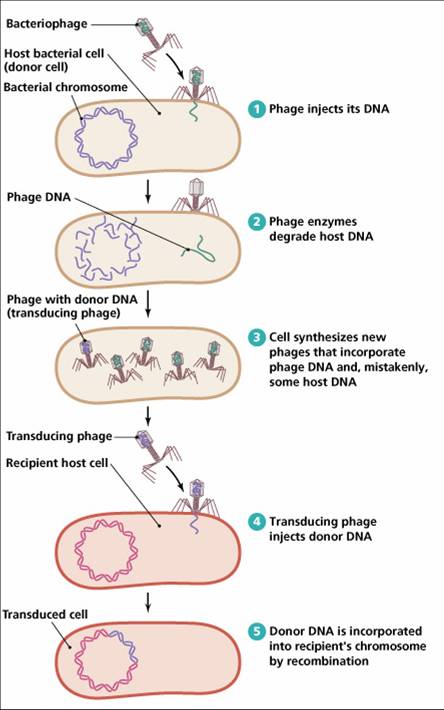
2. Transduction - involves viruses that infect bacteria. Virus carries genes from one cell to another


3. Transformation - Bacteria take up pieces of DNA from the ENVIRONMENT.

What do bacteria need to grow?
Nutrients such as: amino acids and sugars, Time
Space, Oxygen (some bacteria), pH, temperature (favorable environments)